KidsHealth Quick read
I'm Thinking of Suicide. How Can I Get Help? (for Teens) (opens in a new tab, leaves TeenWell)
If you have been thinking about suicide, it is important to get help right away.
Read at KidsHealth
Lesson 3.4 of 4
Who do I actually talk to when things get heavy?
9 slides Download PDF (3.6 MB)
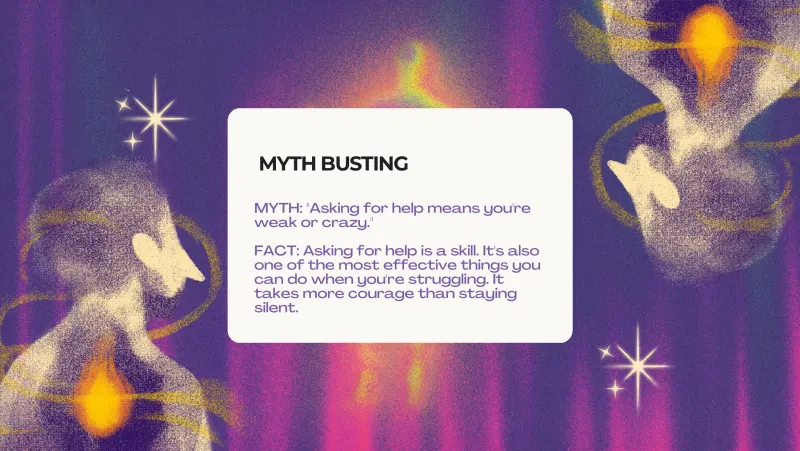
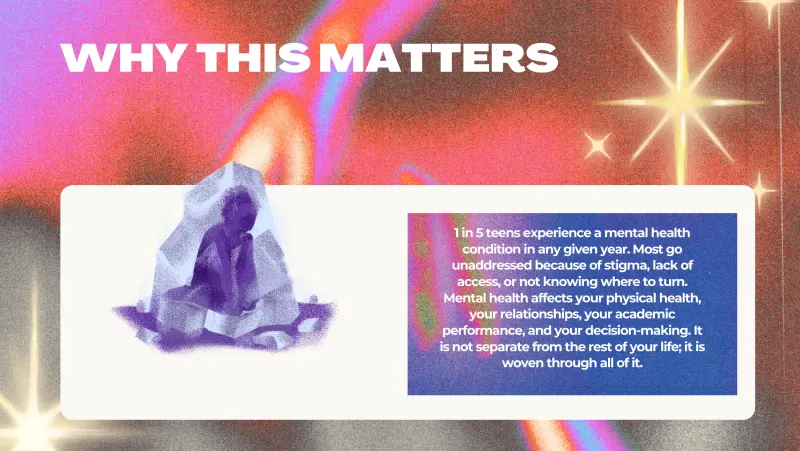
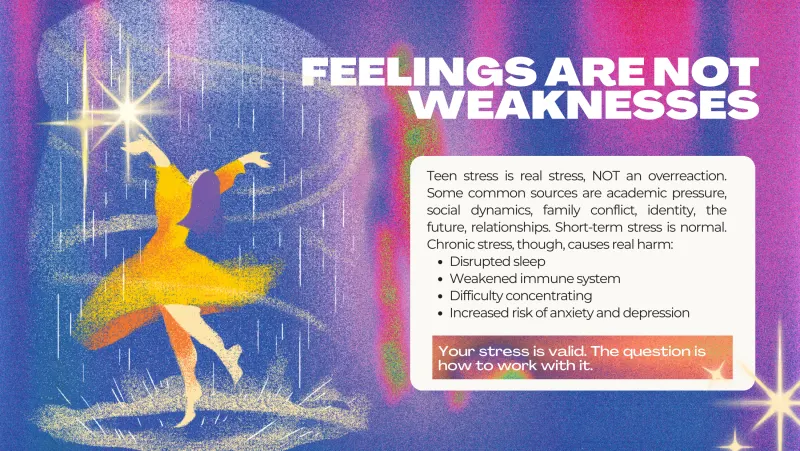
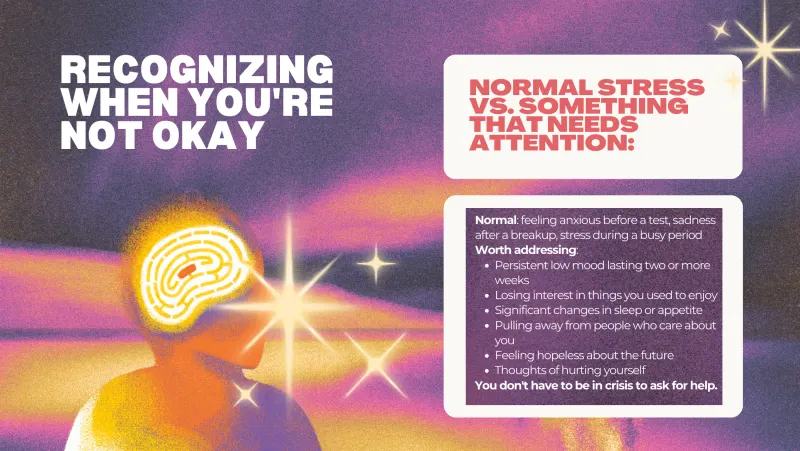
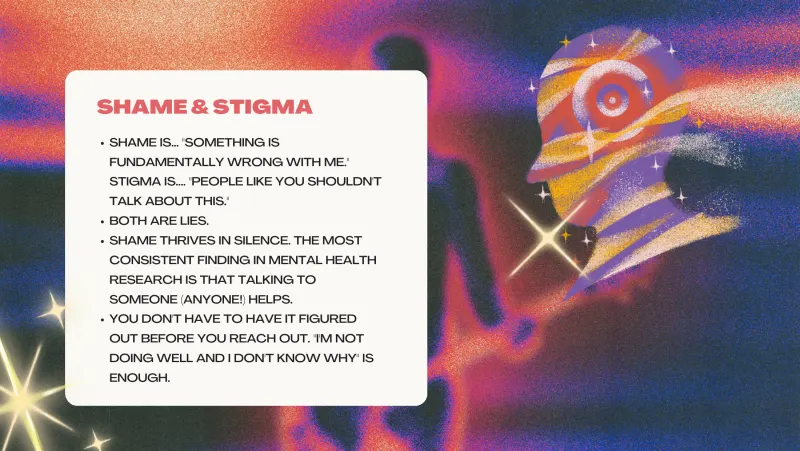
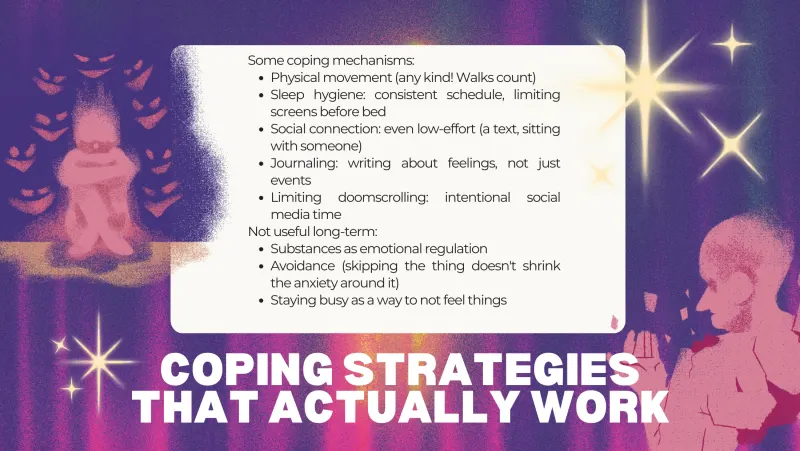
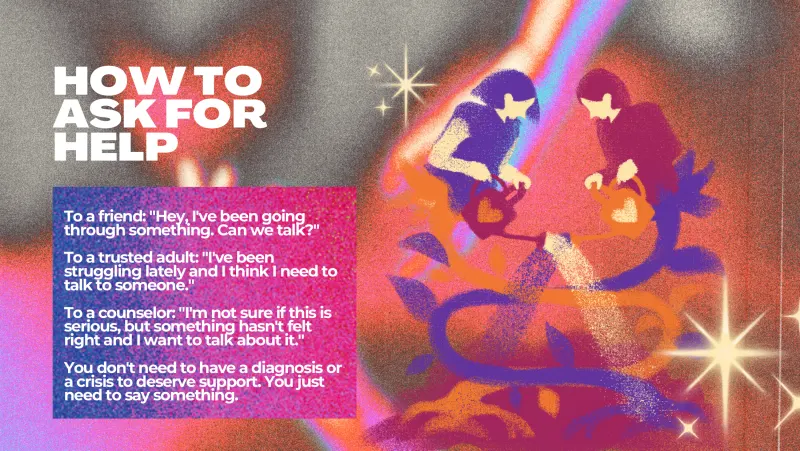
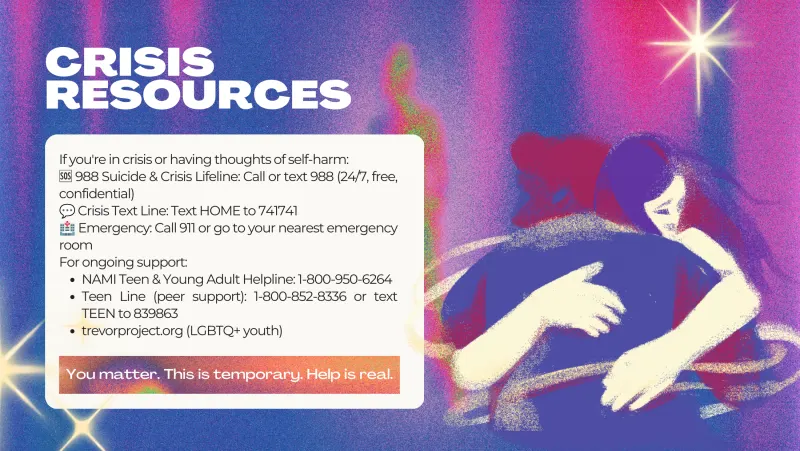
These slides were made by the TeenWell team for classroom use. Unlike the linked resources below, they are our own material.
Shortest reads first.
If you have been thinking about suicide, it is important to get help right away.
Read at KidsHealth
Like friendships, relationships require give and take. This section has information on what makes a healthy relationship.
Read at KidsHealth
Depression can make it hard for someone to see a better future. Here's how to help a friend who's depressed.
Read at KidsHealth
Have you heard that people who talk about suicide won't go through with it? That's not true. Read this article to learn some of the other warning signs that a person is considering suicide.
Read at KidsHealth
School counselors can give you all sorts of tips and support on solving problems and making good decisions. Find out all the ways counselors can help students.
Read at KidsHealth
If a friend confides they have been raped, sexually abused, or assaulted, your support can mean a lot.
Read at KidsHealth
Alcoholism causes anguish not only for the person who drinks, but for everyone who is involved with that person. But there are things you can do to help cope with the problems alcoholism creates in families.
Read at KidsHealth
Breakups suck, but they’re a part of life. Relationships only work when both people are happy in them. Just know time heals all wounds.
Read at Planned Parenthood
Bullying is when someone harms, threatens, or intimidates someone else on purpose. Being bullied can make you feel hurt, confused, scared, and alone.
Read at Planned Parenthood
If you have done everything you can to resolve the situation and nothing has worked, or someone is in immediate danger, there are ways to get help. Find out more at StopBullying.gov.
Read at StopBullying.gov
Having a conversation about mental health might be uncomfortable, but it can make all the difference. Check out these tools – from conversation guides to tips –that can help you help those in need. Created by the Ad Council with NAMI and the American Foundation for Suicide Prevention.
Read at JED
Learn what stigma is, how it affects people with SUD, and how you can help make a change.
Read at NIDA
Get immediate help with Teen Line's hotline support. Call, text, email, or join the discussion board to connect with peers and access mental health care.
Read at Teen Line
Email Teen Line for peer support from teens who understand. Share what's on your mind and get help with whatever you're going through. We're here.
Read at Teen Line
Join the Youth HelpRoom’s next guided conversation for 14 to 24-year-old survivors of sexual violence. These moderated group chats are safe online spaces for learning and healing alongside peers who understand.
Read at RAINN
Lesson 4 of 4 in Healthy Relationships. TeenWell doesn't write health information. Every link above goes to the organization that does.