Skip to content
TeenWell

Lesson 2.2 of 4

Alcohol Safety

What happens when teens drink, and what do I do if a friend has had too much?

Lesson slides

8 slides Download PDF (1.1 MB)

  1. Slide 1: Alcohol Safety Understanding the Risks and Protecting Our Health
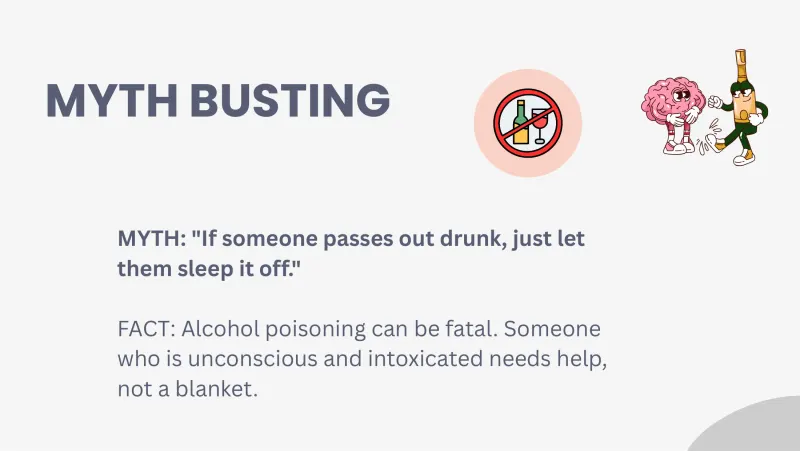
  2. Slide 2: MYTH BUSTING MYTH: "If someone passes out drunk, just let them sleep it off." FACT: Alcohol poisoning can be fatal. Someone who is unconscious and intoxicated needs help, not a …
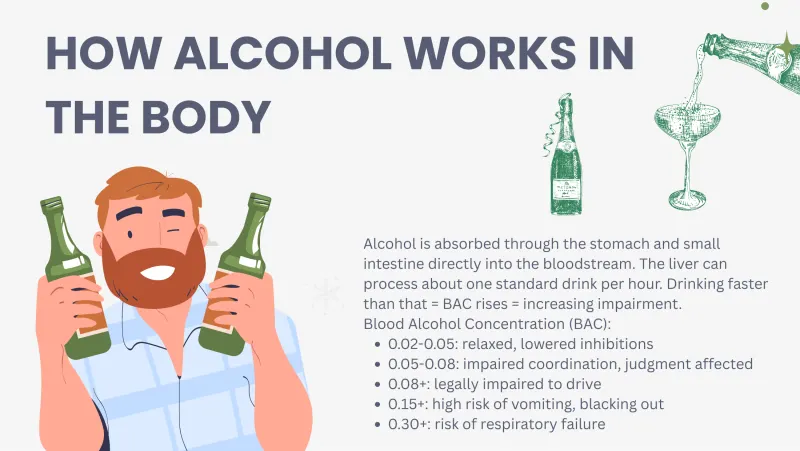
  3. Slide 3: HOW ALCOHOL WORKS IN THE BODY Alcohol is absorbed through the stomach and small intestine directly into the bloodstream. The liver can process about one standard drink per hour.…
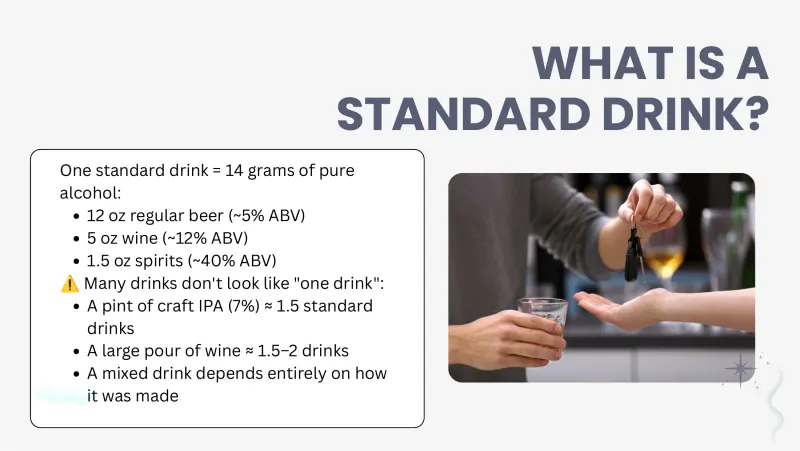
  4. Slide 4: WHAT IS A STANDARD DRINK? One standard drink = 14 grams of pure alcohol: 12 oz regular beer (~5% ABV) 5 oz wine (~12% ABV) 1.5 oz spirits (~40% ABV) ⚠️ Many drinks don't look li…
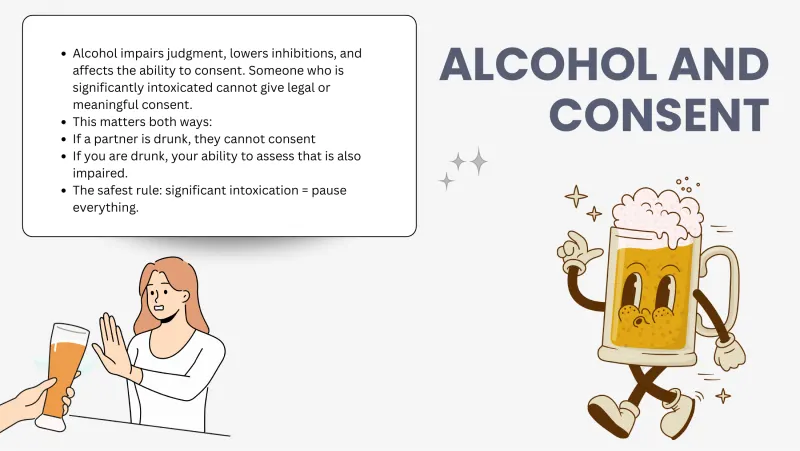
  5. Slide 5: Alcohol impairs judgment, lowers inhibitions, and affects the ability to consent. Someone who is significantly intoxicated cannot give legal or ALCOHOL AND meaningful consent. T…
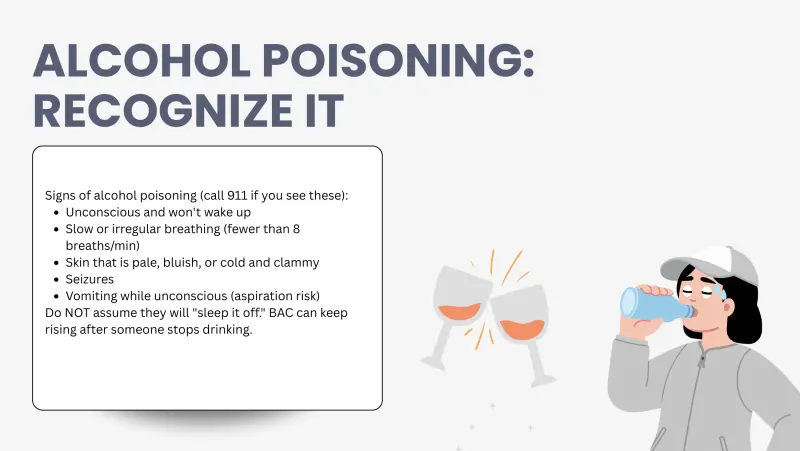
  6. Slide 6: ALCOHOL POISONING: RECOGNIZE IT Signs of alcohol poisoning (call 911 if you see these): Unconscious and won't wake up Slow or irregular breathing (fewer than 8 breaths/min) Skin…
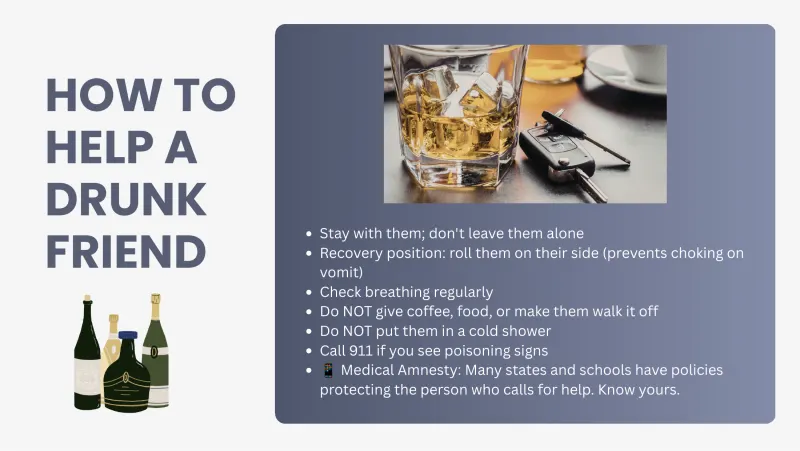
  7. Slide 7: HOW TO HELP A DRUNK FRIEND Stay with them; don't leave them alone Recovery position: roll them on their side (prevents choking on vomit) Check breathing regularly Do NOT give co…
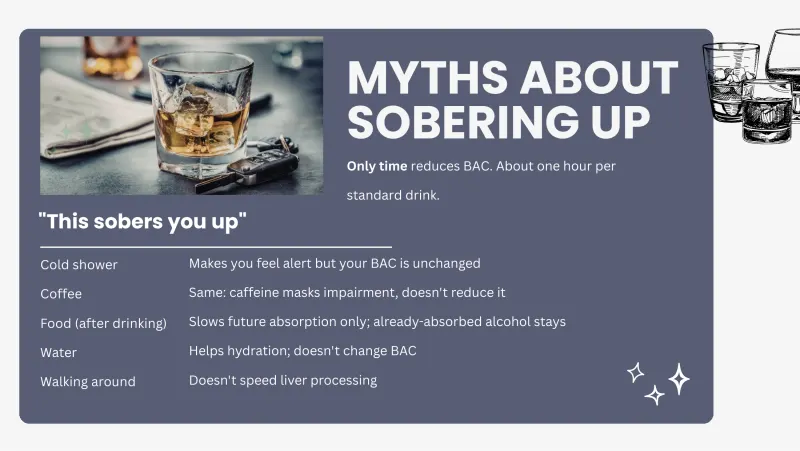
  8. Slide 8: MYTHS ABOUT SOBERING UP Only time reduces BAC. About one hour per standard drink. "This sobers you up" ____________________________________________________________ Cold shower M…
Read these slides as text
  1. Slide 1. Alcohol Safety Understanding the Risks and Protecting Our Health
  2. Slide 2. MYTH BUSTING MYTH: "If someone passes out drunk, just let them sleep it off." FACT: Alcohol poisoning can be fatal. Someone who is unconscious and intoxicated needs help, not a blanket.
  3. Slide 3. HOW ALCOHOL WORKS IN THE BODY Alcohol is absorbed through the stomach and small intestine directly into the bloodstream. The liver can process about one standard drink per hour. Drinking faster than that = BAC rises = increasing impairment. Blood Alcohol Concentration (BAC): 0.02-0.05: relaxed, lowered inhibitions 0.05-0.08: impaired coordination, judgment affected 0.08+: legally impaired to drive 0.15+: high risk of vomiting, blacking out 0.30+: risk of respiratory failure
  4. Slide 4. WHAT IS A STANDARD DRINK? One standard drink = 14 grams of pure alcohol: 12 oz regular beer (~5% ABV) 5 oz wine (~12% ABV) 1.5 oz spirits (~40% ABV) ⚠️ Many drinks don't look like "one drink": A pint of craft IPA (7%) ≈ 1.5 standard drinks A large pour of wine ≈ 1.5–2 drinks A mixed drink depends entirely on how it was made
  5. Slide 5. Alcohol impairs judgment, lowers inhibitions, and affects the ability to consent. Someone who is significantly intoxicated cannot give legal or ALCOHOL AND meaningful consent. This matters both ways: If a partner is drunk, they cannot consent CONSENT If you are drunk, your ability to assess that is also impaired. The safest rule: significant intoxication = pause everything.
  6. Slide 6. ALCOHOL POISONING: RECOGNIZE IT Signs of alcohol poisoning (call 911 if you see these): Unconscious and won't wake up Slow or irregular breathing (fewer than 8 breaths/min) Skin that is pale, bluish, or cold and clammy Seizures Vomiting while unconscious (aspiration risk) Do NOT assume they will "sleep it off." BAC can keep rising after someone stops drinking.
  7. Slide 7. HOW TO HELP A DRUNK FRIEND Stay with them; don't leave them alone Recovery position: roll them on their side (prevents choking on vomit) Check breathing regularly Do NOT give coffee, food, or make them walk it off Do NOT put them in a cold shower Call 911 if you see poisoning signs 📱 Medical Amnesty: Many states and schools have policies protecting the person who calls for help. Know yours.
  8. Slide 8. MYTHS ABOUT SOBERING UP Only time reduces BAC. About one hour per standard drink. "This sobers you up" ____________________________________________________________ Cold shower Makes you feel alert but your BAC is unchanged Coffee Same: caffeine masks impairment, doesn't reduce it Food (after drinking) Slows future absorption only; already-absorbed alcohol stays Water Helps hydration; doesn't change BAC Walking around Doesn't speed liver processing

These slides were made by the TeenWell team for classroom use. Unlike the linked resources below, they are our own material.

Start here

Shortest reads first.

KidsHealth Quick read

Binge Drinking (for Teens) (opens in a new tab, leaves TeenWell)

The definition of binge drinking in the United States is the consumption of five or more drinks in a row by men – or four or more drinks in a row by women – at least once in the previous two weeks. Surprised? Find out more.

Read at KidsHealth

Go deeper

Talk to someone or find care

Lesson 2 of 4 in Substance Use & Awareness. TeenWell doesn't write health information. Every link above goes to the organization that does.