KidsHealth Quick read
Abusive Relationships (for Teens) (opens in a new tab, leaves TeenWell)
Abuse has no place in love. Read this article to find out how to recognize the signs of abuse and how you can get help.
Read at KidsHealth
Lesson 3.3 of 4
What does manipulation look like when you're the one inside it?
8 slides Download PDF (1.5 MB)
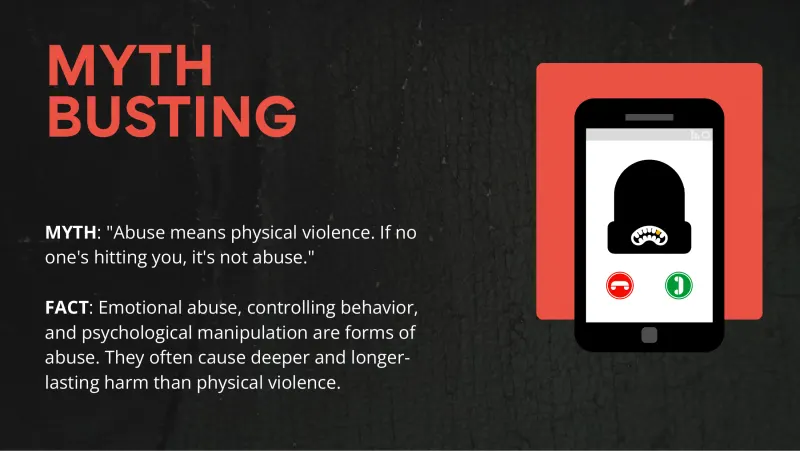
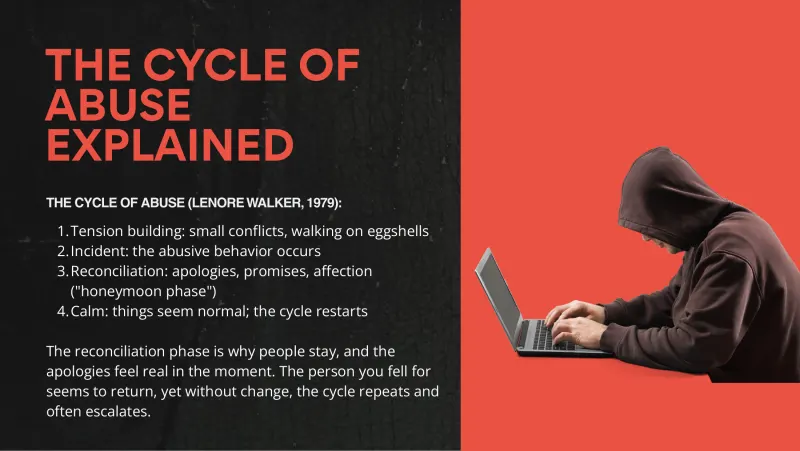
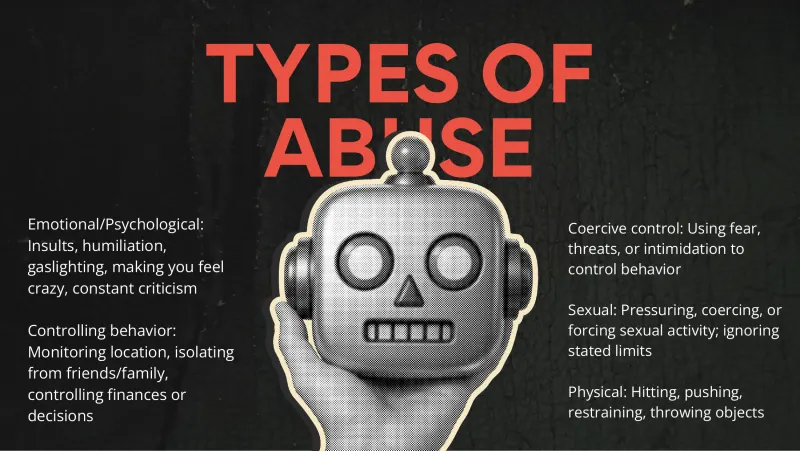
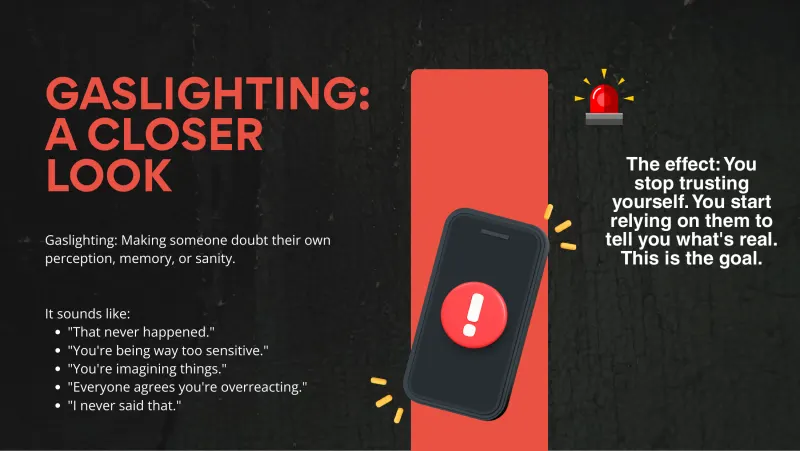
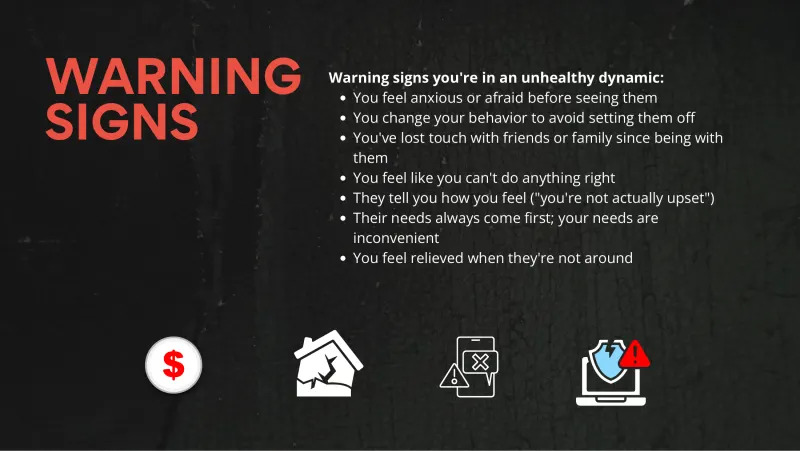
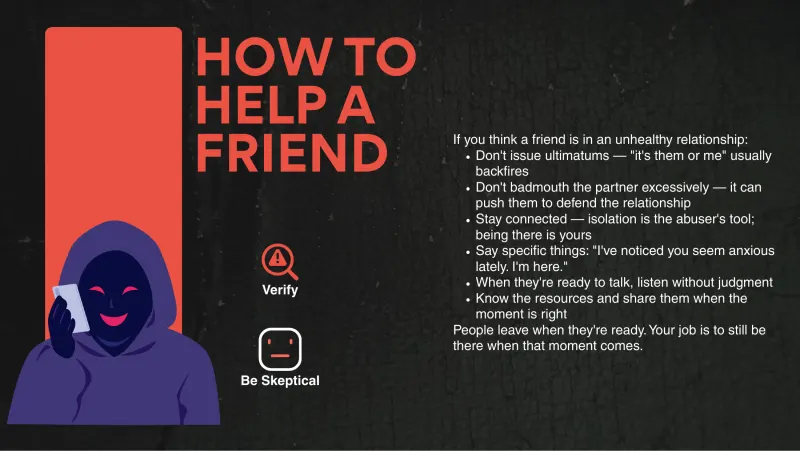
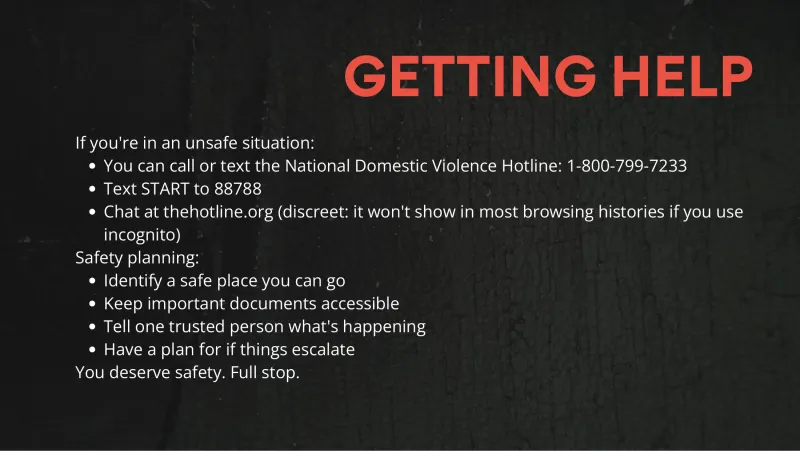
These slides were made by the TeenWell team for classroom use. Unlike the linked resources below, they are our own material.
Shortest reads first.
Abuse has no place in love. Read this article to find out how to recognize the signs of abuse and how you can get help.
Read at KidsHealth
Abuse means treating another person with violence, cruelty, harm, or force. It's never OK, and it's not the fault of the person who is being abused. Tell an adult you trust or call a helpline.
Read at KidsHealth
Sexual violence is unwanted sexual behavior that is forced on someone. It can take many forms, including rape. Sexual violence and rape are never OK. Find out what to do and how to get help if you need it.
Read at KidsHealth
If you don’t consent to sex & someone forces you to do something sexual, this is sexual assault, or rape. Someone hurting you like this is never your fault
Read at Planned Parenthood
Abusive relationships are a serious problem that can lead to dating violence. If you, or someone you know, is an abusive relationship, seek help.
Read at Planned Parenthood
Domestic abuse warning signs: Even one or two of these behaviors in a relationship is a red flag that abuse may be present.
Read at The Hotline
Abuse, whether physical, emotional, verbal, or sexual, can have long-term effects on your mental health. Trauma can affect how you feel about yourself
Read at OASH Women's Health
Know Your IX empowers students to end gender-based and sexual violence in schools. Learn about your rights under Title IX and join our efforts to stop sexual violence.
Read at Advocates for Youth
Recognizing the different types of abuse can help you understand what you are experiencing or share information with a loved one.
Read at The Hotline
Understand relationship abuse: Domestic violence is a pattern of behaviors to maintain power & control in an intimate relationship.
Read at The Hotline
Power and Control Wheel: A useful lens for examining domestic violence, these are tactics an abusive partner may use in a relationship.
Read at The Hotline
What is abuse and what kinds of abuse are there? Information on abuse including help identifying it, prevention, avoiding it and getting out, and healing.
Read at Scarleteen
If you are going through abuse, or if you know someone who is, find out what to do.
Read at KidsHealth
Get relationship help 24/7/365: confidential support for young adults & their loved ones related to healthy relationships & dating abuse.
Read at love is respect
If you're experiencing abuse, you can get help with just a call or chat. Our trained advocates offer free, confidential support 24/7.
Read at The Hotline
Since 1994, RAINN’s victim service programs have helped over 5 million survivors of sexual violence and their loved ones with support and resources that promote healing, hope, and courage.
Read at RAINN
Lesson 3 of 4 in Healthy Relationships. TeenWell doesn't write health information. Every link above goes to the organization that does.