Skip to content
TeenWell

Lesson 3.2 of 4

Digital Safety & Social Media

How do I stay safe and sane online?

Lesson slides

8 slides Download PDF (1.2 MB)

  1. Slide 1: INTERNET SAFETY The Dos for Best Practices!
  2. Slide 2: MYTH BUST MYTH: "If you send something to someone you trust, it stays between you." FACT: Any image or message sent digitally can be screenshotted, saved, and shared: regardless…
  3. Slide 3: WHY THIS MATTERS By the time most teens turn 18, they've been online for most of their social lives. Digital spaces are where relationships are built, conflicts happen, and pres…
  4. Slide 4: SEXTING: THE REAL RISKS Sexting = sending sexually explicit images or messages digitally. Legal: In most U.S. states, explicit images of anyone under 18 (including yourself) can…
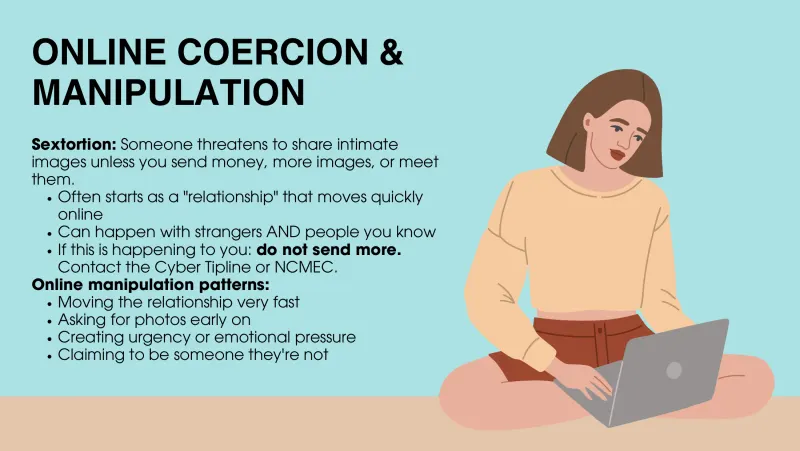
  5. Slide 5: ONLINE COERCION & MANIPULATION Sextortion: Someone threatens to share intimate images unless you send money, more images, or meet them. Often starts as a "relationship" that mov…
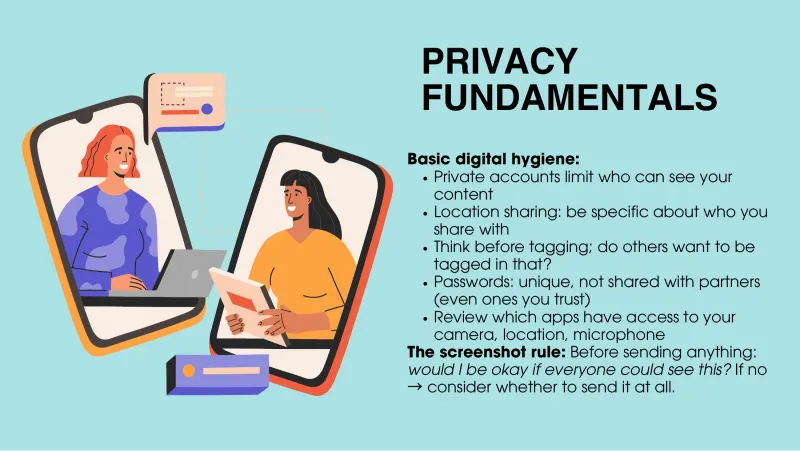
  6. Slide 6: PRIVACY FUNDAMENTALS Basic digital hygiene: Private accounts limit who can see your content Location sharing: be specific about who you share with Think before tagging; do other…
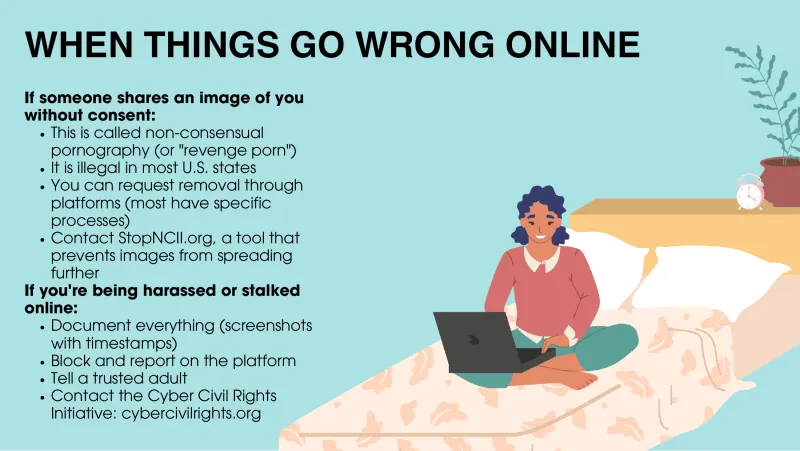
  7. Slide 7: WHEN THINGS GO WRONG ONLINE If someone shares an image of you without consent: This is called non-consensual pornography (or "revenge porn") It is illegal in most U.S. states Yo…
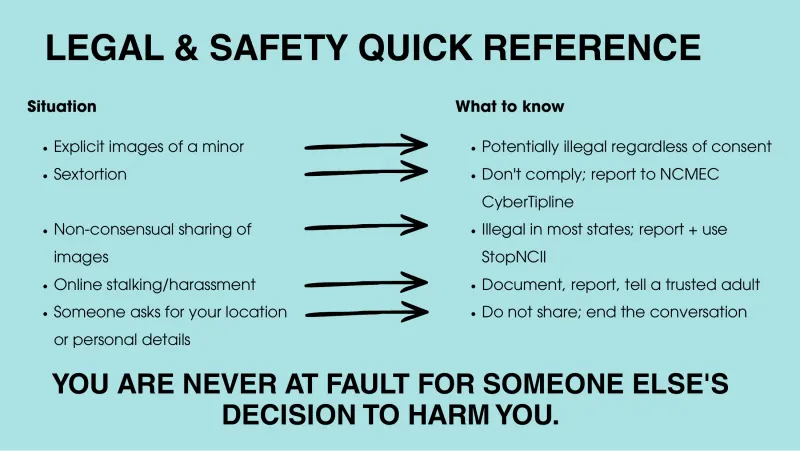
  8. Slide 8: LEGAL & SAFETY QUICK REFERENCE Situation What to know Explicit images of a minor Potentially illegal regardless of consent Sextortion Don't comply; report to NCMEC CyberTipline …
Read these slides as text
  1. Slide 1. INTERNET SAFETY The Dos for Best Practices!
  2. Slide 2. MYTH BUST MYTH: "If you send something to someone you trust, it stays between you." FACT: Any image or message sent digitally can be screenshotted, saved, and shared: regardless of the app, the setting, or the person.
  3. Slide 3. WHY THIS MATTERS By the time most teens turn 18, they've been online for most of their social lives. Digital spaces are where relationships are built, conflicts happen, and pressure is applied. They're also where some of the most serious safety risks for teens now occur. This module is all about protecting yourself, rather than avoiding the internet.
  4. Slide 4. SEXTING: THE REAL RISKS Sexting = sending sexually explicit images or messages digitally. Legal: In most U.S. states, explicit images of anyone under 18 (including yourself) can constitute child pornography under the law Both the sender AND the recipient can face legal consequences "I'm sending it to my boyfriend/girlfriend" does not change the law Practical: Screenshots are permanent Relationships end Once an image leaves your device, you have no control over it
  5. Slide 5. ONLINE COERCION & MANIPULATION Sextortion: Someone threatens to share intimate images unless you send money, more images, or meet them. Often starts as a "relationship" that moves quickly online Can happen with strangers AND people you know If this is happening to you: do not send more. Contact the Cyber Tipline or NCMEC. Online manipulation patterns: Moving the relationship very fast Asking for photos early on Creating urgency or emotional pressure Claiming to be someone they're not
  6. Slide 6. PRIVACY FUNDAMENTALS Basic digital hygiene: Private accounts limit who can see your content Location sharing: be specific about who you share with Think before tagging; do others want to be tagged in that? Passwords: unique, not shared with partners (even ones you trust) Review which apps have access to your camera, location, microphone The screenshot rule: Before sending anything: → would I be okay if everyone could see this? If no consider whether to send it at all.
  7. Slide 7. WHEN THINGS GO WRONG ONLINE If someone shares an image of you without consent: This is called non-consensual pornography (or "revenge porn") It is illegal in most U.S. states You can request removal through platforms (most have specific processes) Contact StopNCII.org, a tool that prevents images from spreading further If you're being harassed or stalked online: Document everything (screenshots with timestamps) Block and report on the platform Tell a trusted adult Contact the Cyber Civil Rights Initiative: cybercivilrights.org
  8. Slide 8. LEGAL & SAFETY QUICK REFERENCE Situation What to know Explicit images of a minor Potentially illegal regardless of consent Sextortion Don't comply; report to NCMEC CyberTipline Non-consensual sharing of Illegal in most states; report + use images StopNCII Online stalking/harassment Document, report, tell a trusted adult Someone asks for your location Do not share; end the conversation or personal details YOU ARE NEVER AT FAULT FOR SOMEONE ELSE'S DECISION TO HARM YOU.

These slides were made by the TeenWell team for classroom use. Unlike the linked resources below, they are our own material.

Start here

Shortest reads first.

Talk to someone or find care

Lesson 2 of 4 in Healthy Relationships. TeenWell doesn't write health information. Every link above goes to the organization that does.